Sulfuric acid (H2SO4) is one of the most widely produced and used chemicals in the world. It appears in processes as different as fertilizer manufacturing, petroleum refining, water treatment, battery production and the synthesis of other chemical compounds. This broad presence comes from the fact that it is a strong, diprotic mineral acid with a relatively low production cost at scale, characteristics that make it useful in practically any process that calls for acidification, dehydration or reaction with bases and metals.
In the industrial chemistry literature, a country's per capita consumption of sulfuric acid is often cited as an indicator of how industrialized its economy is. The more diversified the industrial base, the greater the demand for this chemical tends to be in sectors ranging from agriculture to electronics.
This guide covers what sulfuric acid is, its properties that matter for industrial use, the sectors where it appears most often, and how to choose between 98% technical grade and analytical grade (P.A.) according to the intended application. The technical details for each industrial sector (dosage, point of application, material compatibility) are covered in dedicated articles for each sector on the Boreto & Cardoso blog.
What sulfuric acid is
Sulfuric acid is a strong mineral acid with the formula H2SO4. It is classified as diprotic because each molecule can release two H+ ions in aqueous solution. This double dissociation is one of the reasons sulfuric acid has a high acidifying power per volume applied, compared with monoprotic acids at an equivalent concentration.
In its concentrated commercial form, sulfuric acid is a viscous, dense, oily liquid, colorless to slightly yellowish. The density of the concentrated product is around 1.84 g/mL, considerably higher than that of water, which tells the operator from the outset that handling volumes of sulfuric acid involves proportionally greater masses than the apparent volume suggests.
Two physicochemical properties deserve special attention from anyone who works with the product day to day in industry:
High hygroscopicity. Concentrated sulfuric acid has a strong affinity for water, including the moisture in the air. This calls for well-sealed packaging and tanks, both to preserve the product's concentration and to avoid the heat release associated with uncontrolled absorption of atmospheric moisture.
Strongly exothermic dissolution. When concentrated sulfuric acid is diluted in water, the reaction releases a significant amount of heat. This thermal behavior is the reason for a well-established safety rule, widely documented in the chemical safety literature: the acid must always be added to the water, slowly and with stirring, never the reverse. This topic is covered in detail in the article How to Dilute Sulfuric Acid Safely.
Main industrial applications
The versatility of sulfuric acid comes from a combination of three properties: it is a strong acid, a dehydrating agent and, under certain conditions, an oxidizer. This combination explains why the product appears in processes that are so different from one another. The sectors below are the ones that use it most. We will not go into the operating details of each one here, since each sector is covered in its own articles on this blog.
Fertilizers
The manufacture of phosphate and nitrogen fertilizers is among the largest consumers of sulfuric acid in the world. The acid is a direct input in the production of superphosphates and ammonium sulfate, two compounds widely used in agricultural fertilization. The scale of this consumption is one of the reasons why global sulfuric acid production volumes are so large.
Metalworking and pickling
In metalworking, sulfuric acid is used in pickling processes, which remove oxides and rust layers from metal surfaces before later steps such as galvanizing, painting or rolling. The acid also plays a role in ore processing and beneficiation.
Electroplating
In electroplating processes, sulfuric acid is involved in the preparation of metal surfaces and in electrolytic baths, steps that come before the deposition of metal layers on parts and components.
Water and wastewater treatment
In water treatment plants (WTPs) and wastewater treatment plants (WWTPs), sulfuric acid is one of the most widely used chemicals for pH adjustment, both before chemical coagulation steps and before the final discharge of treated effluent, when pH limits set for discharge must be met.
Pulp and paper
In pulp and paper processing, sulfuric acid is used for pH control in stages of the production process, helping to create the chemical conditions needed in different phases of pulp production.
Paints, pigments and textiles
The paint and pigment industry uses sulfuric acid in the synthesis and processing of raw materials. In the textile sector, the product is used in finishing processes and in the treatment of fibers and fabrics.
Laboratories, pharmaceuticals and quality control
Outside the industrial plant, analytical grade sulfuric acid is a standard input in quality control laboratories, where it is used in titrations, sample digestion (as in the Kjeldahl method for nitrogen determination) and precision organic synthesis. This use is found in pharmaceutical, food and petrochemical laboratories, where analytical accuracy matters as much as the chemical reaction itself.
Other applications
Sulfuric acid is also used in the manufacture of detergents and cleaning agents, in petroleum refining, in the production of lead-acid batteries, in industrial wastewater treatment, in the synthesis of other chemical compounds and in the sugar and ethanol industry, at specific stages of the production process.
98% technical grade or analytical grade: what is the difference
One of the first decisions when buying sulfuric acid is choosing between technical grade and analytical grade. Although both are essentially the same chemical compound at a similar concentration, they differ in purity level, impurity control and intended use.
Sulfuric acid 98% (technical grade)
Sulfuric Acid 98% is the grade intended for process applications at industrial scale. It is a viscous, dense, oily liquid, colorless to slightly yellowish, with a density close to 1.84 g/mL and high hygroscopicity. Its specification is suitable for processes that do not require strict analytical control of trace impurities, such as the manufacture of fertilizers, detergents and cleaning agents, ore processing, petroleum refining, pigment and paint production, the textile industry, pulp and paper, electroplating, wastewater treatment, lead-acid batteries, the synthesis of other chemicals, and the sugar and ethanol industry.
For the vast majority of industrial applications listed in this guide, the 98% grade is the right choice, with the advantage of a cost per unit of product that is typically lower than analytical grade.
Analytical grade sulfuric acid (P.A.)
Analytical Grade Sulfuric Acid (P.A.) follows the ACS specification, with a concentration of 95 to 98% and a molecular weight of 98.08 g/mol. Its density is similar to that of technical grade, close to 1.84 g/mL, but what sets it apart is strict purity control and a low impurity content, characteristics required in analytical and laboratory applications.
This grade is intended for quality control laboratories, titrations, sample digestion by the Kjeldahl method, precision organic synthesis and processes that require analytical traceability, such as pharmaceutical, food and petrochemical quality control.
How to choose the right grade
The choice between the two grades depends directly on the intended use, rather than on preference or cost alone:
If the application is an industrial-scale process (pH adjustment in large volumes, pickling, fertilizer manufacturing, wastewater treatment and the other uses mentioned in this guide), 98% technical grade meets the need at a cost better suited to the scale of consumption.
If the application is analytical or calls for precision (laboratory work, quality control, titration, small-scale synthesis with purity requirements), analytical grade is the correct option, since impurities present in technical grade can interfere with analytical results or with the quality of a fine synthesis.
If in doubt about which grade suits a specific application, the right approach is to check each product's technical data sheet and, if necessary, the supplier's technical support before buying, since the wrong choice can compromise both the process result and the cost of the operation.
What is the difference between technical grade and analytical grade sulfuric acid?
The main difference lies in the purity level and the intended use. 98% technical grade is intended for industrial-scale processes such as fertilizer manufacturing, water and wastewater treatment, metal pickling and many other processes that do not require strict control of trace impurities. Analytical grade (P.A.) follows the ACS specification, with strict purity control, and is intended for laboratories, titrations, sample digestion and precision organic synthesis, where impurities can compromise the analytical result.
Is sulfuric acid dangerous?
Concentrated sulfuric acid is a corrosive product that must be handled with suitable personal protective equipment (gloves, chemical splash goggles, apron and respiratory protection where applicable) and with technical knowledge of how it behaves, especially the heat released when it is diluted in water. As with any corrosive chemical, safe use depends on following established operating procedures, using equipment compatible with the product and consulting the safety data sheet (SDS) provided by the distributor or manufacturer beforehand.
Why is sulfuric acid so widely used in industry?
The combination of properties of sulfuric acid (a strong, diprotic mineral acid with dehydrating capacity and, under certain conditions, oxidizing capacity) allows it to be used in very different processes: from fertilizer manufacturing to petroleum refining, from water treatment to battery production. This versatility, together with availability at industrial scale, explains why sulfuric acid consumption is often cited as an indicator of how industrialized an economy is.
Can technical grade and laboratory sulfuric acid be used interchangeably?
This is not recommended. Although the concentration is similar in both grades, technical grade may contain impurities that compromise analytical results in the laboratory, while analytical grade costs more and brings no additional benefit in large-scale industrial processes that do not require that level of purity. Choosing the correct grade avoids both technical problems and unnecessary costs.
How Boreto & Cardoso supplies sulfuric acid to industry
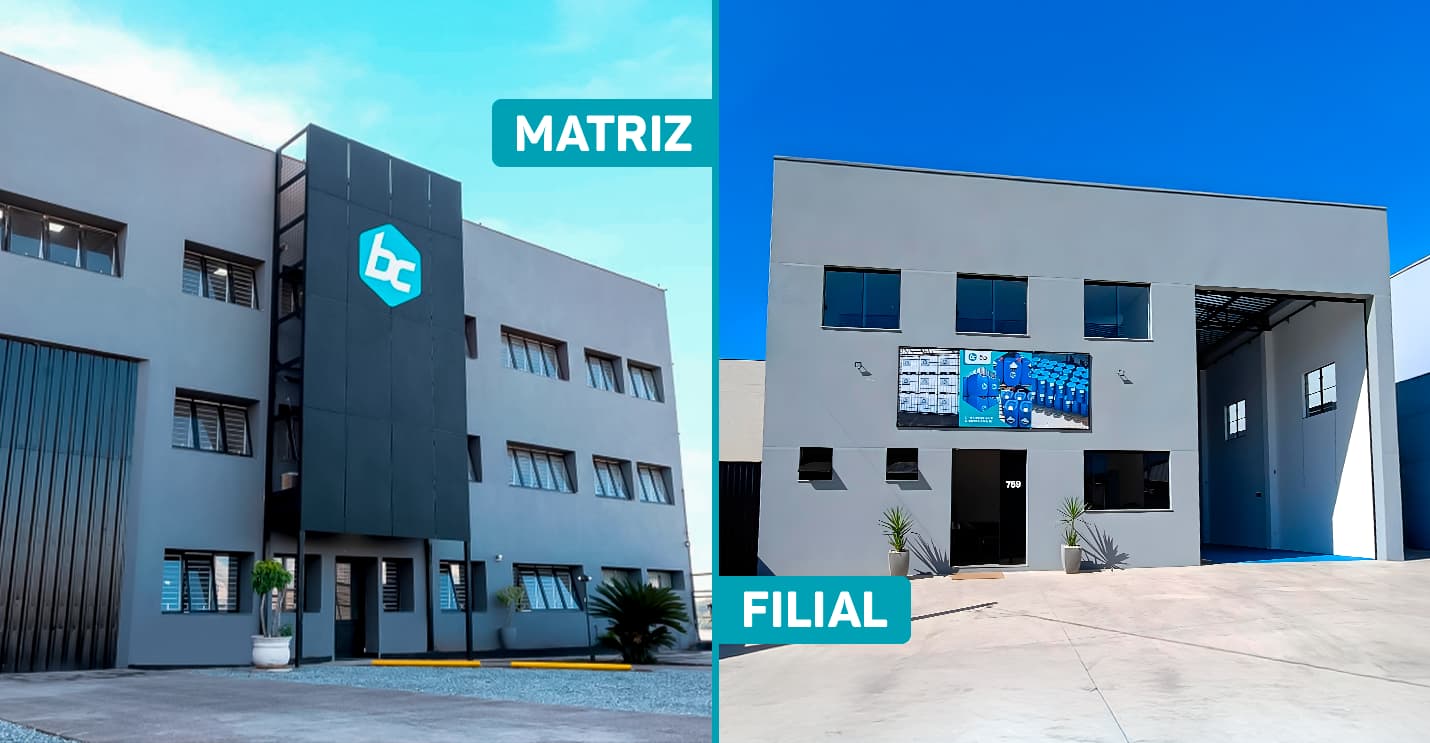
Boreto & Cardoso has been active in the industrial chemicals market since 1972, with its head office in Santana de Parnaíba (SP) and a branch in Limeira (SP). As a distributor, the company does not manufacture the product; it serves a range of industrial sectors with both grades of sulfuric acid (98% technical grade and analytical grade), accompanied by technical documentation that includes a safety data sheet (SDS) and a certificate of analysis for each lot.
The operation is ISO 9001:2015 certified, with the certificate issued by GSC Certificadora under registration BR.087.25, which ensures standardized storage, quality control and traceability processes for every supply. For anyone looking for guidance on which grade of sulfuric acid suits their specific application, Boreto & Cardoso provides detailed technical data sheets for each product and direct service channels for answering technical questions before purchase.
Request a No-Obligation Quote
Get in touch to request:
- A detailed quote for specific products
- Technical information about applications
- Certificates of analysis and documentation
- Special terms for regular purchases
Contact channels:
📞 (11) 3931-1722 | (11) 2366-6260 📱 WhatsApp: (11) 93931-1722 | (11) 98366-6260 📧 boreto@boreto.com.br
Addresses:
📍 Head office: R. Alagoas, 30 - Santana de Parnaíba - SP 📍 Branch: R. Aratibá, 759 - Limeira - SP
Business hours: Monday to Friday: 8 a.m. to 6 p.m. | Saturday: 8 a.m. to 12 p.m.
Note to the Reader This article brings together technical information drawn from various sources, with the aim of broadening knowledge of the raw materials mentioned. It is for information only and does not represent, on the part of Boreto & Cardoso, any indication of application, formulation or direct recommendation for use. Boreto & Cardoso®, with more than 50 years of experience, operates strictly as a supplier of chemicals for a wide range of applications, and each user is responsible for verifying the suitability and compliance of their own application.