A recurring question among technical buyers and laboratory managers is whether there is a real difference, beyond price, between the sulfuric acid used in industrial processes and the sulfuric acid used in laboratory analysis. The question is a fair one: buying the wrong grade has two opposite but equally unwanted consequences. Using a high-purity reagent where it is not needed raises process costs with no matching benefit. Using an acid of insufficient purity where the analysis or process requires tight impurity control can compromise the result in ways that are hard to trace.
This decision comes up often in pharmaceutical, food and petrochemical quality control laboratories, where applications that tolerate variations in purity sit in the same storeroom as applications that do not. Understanding where the real difference between the two versions of the product lies is what allows this choice to be made based on the technical requirements of each application.
The difference is not in the chemical formula
Both analytical grade (P.A.) sulfuric acid and industrial grade sulfuric acid are H2SO4, the same strong diprotic mineral acid. There is no "pharmaceutical molecule" that differs from an "industrial molecule". The formula is the same in both cases; the core difference between the two versions lies in the control of metallic and non-metallic impurities in the final product and in how consistent that composition is from batch to batch.
Industrial grade Sulfuric Acid 98% is a viscous, dense, oily liquid, colorless to slightly yellowish, with a density close to 1.84 g/mL, and highly hygroscopic. Sulfuric Acid P.A. has a concentration between 95% and 98%, a molecular weight of 98.08 g/mol and a density also close to 1.84 g/mL, but it follows ACS specifications, with a high degree of purity and minimum levels of metallic and non-metallic impurities under strict control. In both cases, dissolving the acid in water is a strongly exothermic reaction. The safety rule is the same: always add the acid to the water, never the other way around.
Where purity makes a difference in practice
Processes where industrial grade is enough
In applications such as metal pickling and wastewater treatment, the outcome of the process depends primarily on the concentration and reactivity of the sulfuric acid, not on trace impurities in the parts-per-million range. A small variation in the impurity profile of a batch does not noticeably change the effectiveness of pickling or the result of adjusting the pH of an effluent. In these cases, paying the extra cost of a reagent with analytical purity control brings no matching technical benefit: 98% industrial grade fully meets the needs of the process at a better cost per kilo of product.
Processes where analytical grade is required
In quality control laboratories, scientific research, environmental analysis and analytical validation, the logic is reversed. Applications such as titrations, sample digestion by the Kjeldahl method for total nitrogen determination, preparation of standard solutions, gravimetric analyses and precision organic synthesis depend on a reagent whose composition is known and stable. Trace metallic or non-metallic impurities in the acid itself can interfere directly with the analytical result. The resulting systematic error does not come from the sample but from the reagent used to analyze it.
These sectors include pharmaceuticals, food and petrochemicals, among others that require rigorous analytical validation. In them, analytical grade sulfuric acid to ACS specifications ensures that the analytical blank and the method's calibration curve remain reliable over time, whichever batch of reagent is in use at the moment.
The risk of swapping one for the other
Using industrial grade sulfuric acid in an analysis that requires purity control introduces an uncontrolled variable into the equation: the reagent itself becomes a potential source of error, and this does not show up in any obvious way in the result. Since a laboratory usually has no routine way to tell whether a deviation came from the sample or from the reagent, this type of error tends to be discovered late, typically when results from different reagent batches stop being reproducible.
The reverse (using analytical grade sulfuric acid in high-volume industrial processes, such as pickling or pH adjustment at water and wastewater treatment plants) does not compromise the process technically, but it means using an input with a higher production cost where it adds no value. In operations that consume sulfuric acid in volume, that cost difference adds up quickly over time.
How to decide which grade to buy
The practical question behind this decision is: can a small variation in the impurity profile of a batch change the result of my process or my analysis? If the answer is no, as is usually the case in pickling, anodizing, wastewater treatment or industrial pH adjustment, 98% industrial grade is the technically appropriate choice. If the answer is yes, as in titration, Kjeldahl digestion, standard solution preparation or any analytical validation step, analytical grade is required.
The laboratory's regulatory context is also worth considering. Routines that operate under good laboratory practice or formal analytical validation protocols usually already require, by internal procedure, reagents with a matching specification and Certificate of Analysis. That points directly to analytical grade, regardless of any cost consideration.
Do analytical grade and industrial grade sulfuric acid have the same concentration?
Not necessarily the same stated range, but both are close: industrial grade is sold at 98% and analytical grade between 95% and 98%, both with a density close to 1.84 g/mL. The relevant difference between them is not this concentration range but the control of metallic and non-metallic impurities and batch-to-batch consistency, which is much tighter in analytical grade.
Can I use industrial grade sulfuric acid in laboratory analysis to save money?
It is not recommended when the analysis requires purity control, as in titrations, Kjeldahl digestion or standard solution preparation. Industrial acid may contain impurities at levels incompatible with the expected analytical result, and this introduces a systematic error that is hard to identify later. In that case, the cost savings tend to be wiped out by rework and the loss of confidence in the results.
Is it worth using analytical grade sulfuric acid in a high-volume industrial process?
Technically it works, but it usually does not pay off financially. Analytical grade has a higher production cost because of analytical purity control. In processes such as pickling or wastewater treatment, that control brings no additional benefit: the result depends on the concentration and reactivity of the acid, and trace impurities matter very little.
Boreto & Cardoso: analytical and industrial grade sulfuric acid with technical documentation
Boreto & Cardoso has supplied both 98% industrial grade sulfuric acid and analytical grade sulfuric acid since 1972, for more than 53 years, with ISO 9001:2015 certification (GSC Certificadora, registration BR.087.25). Every delivery comes with a Certificate of Analysis and a Safety Data Sheet. With these documents, the technical buyer can confirm that the grade purchased matches the specification required by the application, whether it is an industrial process or a laboratory analytical routine.
Request a No-Obligation Quote
Contact us to request:
- A detailed quote for specific products
- Technical information on applications
- Certificates of analysis and documentation
- Special terms for regular purchases
How to reach us:
📞 (11) 3931-1722 | (11) 2366-6260 📱 WhatsApp: (11) 93931-1722 | (11) 98366-6260 📧 boreto@boreto.com.br
Addresses:
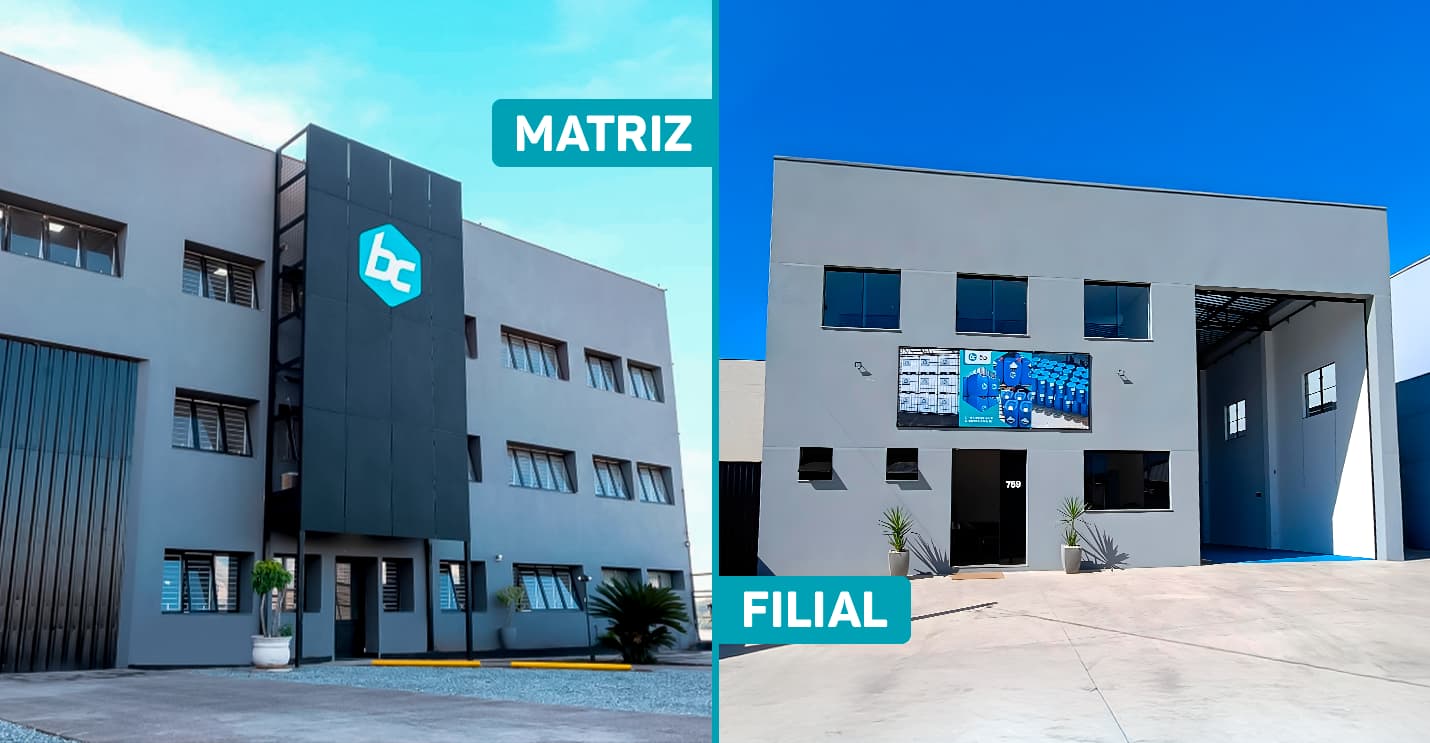
📍 Headquarters: R. Alagoas, 30 - Santana de Parnaíba - SP 📍 Branch: R. Aratibá, 759 - Limeira - SP
Business hours: Monday to Friday: 8 a.m. to 6 p.m. | Saturday: 8 a.m. to 12 p.m.
Note to the Reader This article brings together technical information drawn from various sources, with the aim of broadening knowledge about the raw materials mentioned. It is for information only and does not constitute, on the part of Boreto & Cardoso, any indication of application, formulation or direct recommendation of use. Boreto & Cardoso®, with more than 50 years of experience, operates strictly as a supplier of chemical inputs for a wide range of applications, and each user is responsible for verifying the suitability and compliance of their own application.